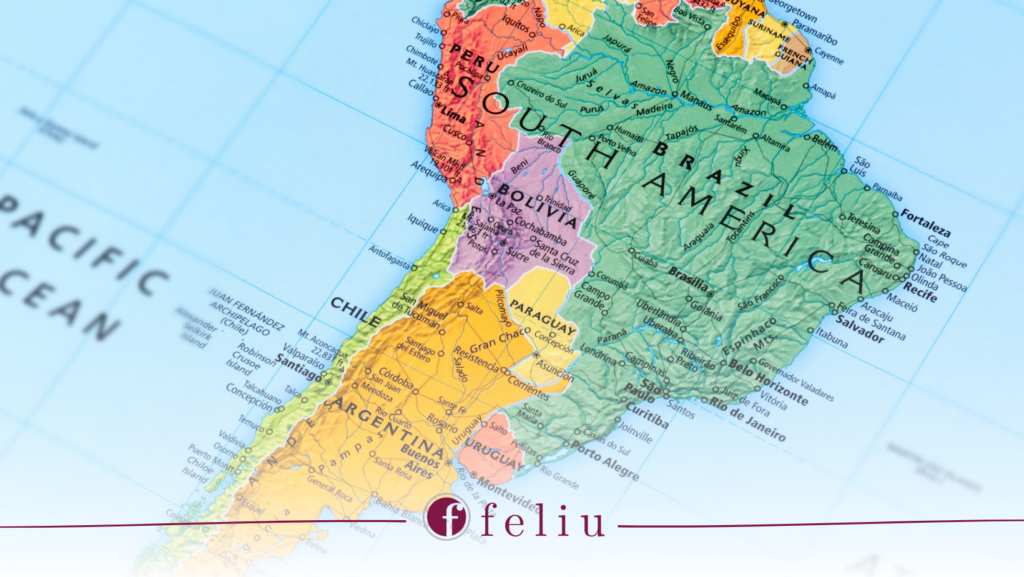
1 May 2026 marks a turning point in trade relations between Europe and South America. The EU-Mercosur interim trade agreement enters into provisional application on that date, and from that moment companies, consumers and farmers across the EU begin to benefit from its effects. After more than 25 years of negotiations, a market of 700 million people has been created in which more than 90% of current tariffs will be liberalised, some with immediate effect from day one.
For Spanish companies, this agreement is not distant news: it is a growth lever that is already active and directly affects those who export, invest or have an operational structure in Brazil, Argentina, Uruguay or Paraguay. The agreement will eliminate 500 million euros in tariffs on Spanish companies, and 91% of Spanish exports will face zero tariffs. Capturing that margin, however, is not automatic. It requires analysis, planning and a legal and operational structure adapted to the new framework.
Spain: a uniquely strategic position
Spain stands out as one of the EU member states with the greatest potential to benefit from the agreement. Its position is explained by the combination of three factors: strong business presence in Latin America, historical and cultural ties, and export weight in agri-food and industrial sectors.
The data supports this: there are at least 1,709 Spanish companies with direct investment in the region, representing 37% of the national total with overseas presence, with a strong footprint in banking, energy, infrastructure and telecommunications. The growth potential is equally significant: Spanish exports to Mercosur are projected to grow by 37% when the agreement is fully deployed, generating additional output equivalent to 0.23% of GDP and more than 22,000 new jobs.
The tariff reduction is particularly relevant in sectors with strong Spanish export presence. For wine and olive oil, tariffs will be eliminated entirely, while European footwear will face a 5% levy compared to the 25% applied to international competitors. In the industrial sector, the agreement will reduce tariffs on cars, currently as high as 35%, machinery, currently between 14% and 20%, and pharmaceuticals, currently up to 14%.
New opportunities in public procurement
One of the lesser-known aspects of the agreement, but one with significant potential impact for companies in engineering, construction, services and technology, is the opening of Mercosur’s public procurement markets. EU companies will now be able to bid for public contracts across the bloc. Brazil’s federal public procurement market alone exceeds 8 billion euros per year. For Spanish companies in the services and infrastructure sectors that until now faced formal and informal barriers to accessing public tenders in these countries, the agreement opens a route that previously did not exist with equivalent legal guarantees.
A progressive impact that demands planning starting today
The agreement does not deploy all its effects at once. Tariff elimination follows a progressive timetable that will extend over 10 to 15 years for the most sensitive products. This means that companies that begin their adaptation process now will have a genuine competitive advantage over those that wait for the effects to become more visible.
The aspects requiring immediate review in any company with activity in Mercosur, or that is considering entering these markets, include the legal structure of the establishment, tariff optimisation under the new regime, distribution and licensing contracts in light of the new regulatory framework, access to financing instruments linked to the agreement and the reassessment of market entry strategies where tariff costs previously made operations unviable.
A context with nuances worth understanding
The agreement is in provisional application, not definitive force. The European Parliament has referred the question of its legality to the Court of Justice of the EU. If the court were to rule against it, the agreement would be suspended. It is a low but real risk. Companies that structure their operations around this agreement should do so with a legal architecture that accounts for that contingency.
Additionally, the short-term macroeconomic environment in the region has not been resolved by the agreement. Global geopolitical uncertainty and its impact on Latin American financial markets are variables that must be incorporated into any viability assessment of an operation in Mercosur.
Is your company ready to capitalise on the EU-Mercosur agreement?
At Feliu N&I, we support Spanish companies at every stage of their internationalisation in Latin America: from viability analysis and legal structuring of the establishment, through to operational management of the in-country presence, regulatory compliance and access to available public support instruments. If your company exports to Mercosur, has subsidiaries in the region or is considering taking the step, the time to review your strategy in light of the new framework is now.
Contact us for a personalised consultation.
www.feliu.biz | comunicacion@feliu.biz