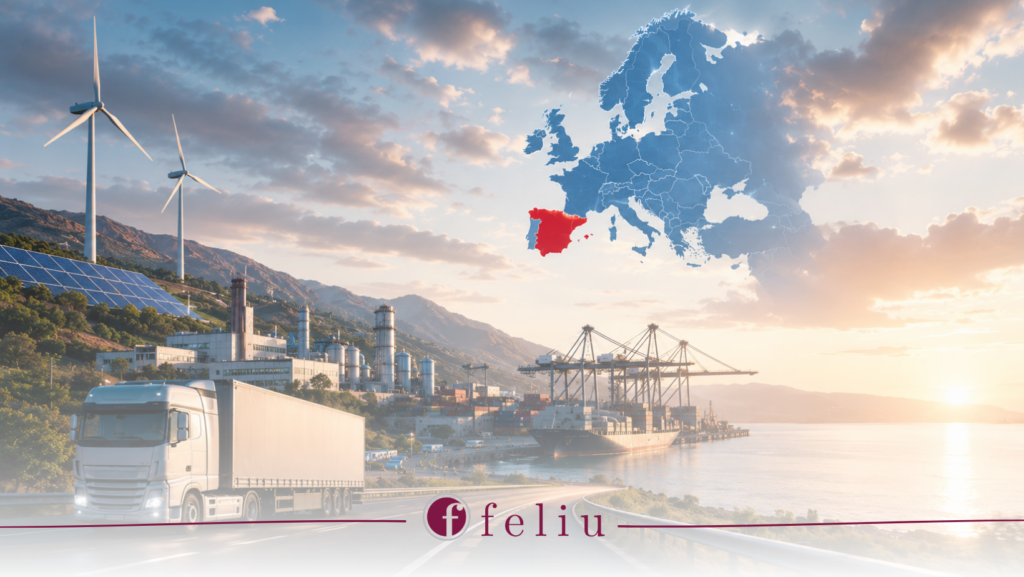
Forty years ago, major German, French, and Nordic companies looked south and saw an opportunity. Spain had just joined the European Economic Community, operating costs were competitive, and access to the Single Market was guaranteed. Volkswagen acquired SEAT. Ford chose Valencia to manufacture vehicles for export across Europe. The chemical, aerospace, and automotive components industries established a strong presence in a country that, within just a few years, evolved from being a low-cost investment destination into an export platform fully integrated into European value chains.
That first investment cycle lasted until the European Union’s eastward enlargement created lower-cost alternatives. Poland, Hungary, and the Czech Republic attracted much of the manufacturing investment that had previously flowed to Spain. It was a straightforward cost-driven decision. Yet Spain proved more resilient than it is often given credit for: during those years, it developed world-class logistics and port infrastructure, strengthened its automotive components industry, expanded its renewable energy capacity, and invested in training highly skilled engineers.
Today, those long-term investments are paying off.
Three major disruptions have fundamentally changed the industrial location equation in Europe. The pandemic exposed the vulnerability of extended global supply chains. The 2022 energy crisis dramatically increased production costs across Central and Northern Europe. More recently, geopolitical instability has raised serious concerns about dependence on distant suppliers. As a result, European companies are increasingly seeking to manufacture closer to home, with greater control over their supply chains and access to more predictable energy sources.
Spain meets these requirements better than most countries. Its electricity is becoming increasingly clean and cost-competitive, thanks to a renewable energy mix that has been expanding steadily for years. Its strategic geographic location makes it a natural gateway to both North Africa and Latin America—two regions of growing importance for export-oriented businesses. At the same time, the industrial base built during the first investment cycle—automotive, aerospace, chemicals, and logistics—remains well established, mature, and capable of supporting new industrial investment.
The outlook is not without challenges. Bureaucratic procedures, regulatory uncertainty, and limited policy predictability in certain sectors have delayed projects that, on paper, were well suited to Spain. The opportunity is real, but it will not remain open indefinitely.
For companies evaluating where to establish or expand manufacturing operations in Europe, Spain now offers something it has not always been able to provide: a compelling combination of industrial stability, competitive energy costs, and access to key international markets that extends well beyond labour cost considerations. The first investment cycle was shaped by history. The second is being driven by geography, energy, and Europe’s strategic determination to reduce external dependencies.
The team at Feliu and Expat Feliu is ready to advise you on all legal, tax, corporate, and international mobility aspects of your investment project in Spain. Contact us for a personalised consultation.