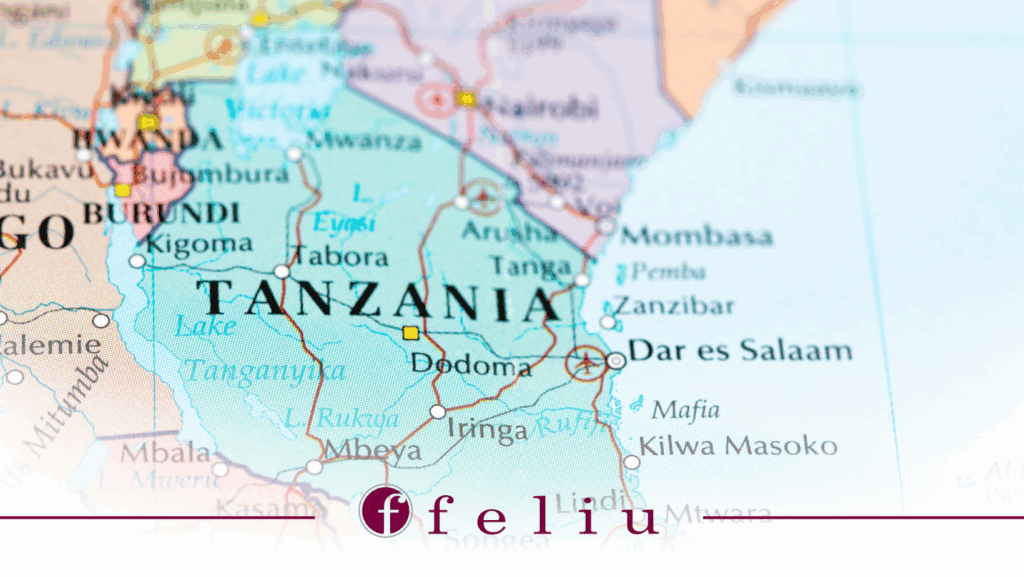
The President of the United Republic of Tanzania has signed a series of significant reforms to its labor laws, introducing important changes in recruitment, labor licensing, work permits, and legal procedures. The changes affect the Employment and Industrial Relations Act (Cap. 366), the Labor Institutions Act (Cap. 300), and the Employment of Non-Citizens Regulation Act (Cap. 436), and seek to adapt the legal framework to current labor market challenges.
Updates on work permits for foreigners
The reforms also affect the Employment of Non-Citizens Regulation Act. From now on, Class A Work Permit holders will be able to apply for authorization to also work in other companies in which they own shares, without needing to obtain a new permit. This represents a significant administrative simplification for foreign investors. Furthermore, it establishes that applications for permit renewal must be submitted at least 60 days before their expiration, and that fees paid will not be refundable in the event of a denial. In the case of refugees, work permits will be valid as long as their legal status is maintained.
These reforms reflect the Tanzanian government’s commitment to modernizing its labor legislation, providing greater legal certainty and facilitating foreign investment, while better protecting workers from changing social and economic circumstances.
New contracts for temporary workers and recent graduates
One of the most notable points of the reform is the expansion of fixed-term contract types. From now on, this type of contract will be permitted not only for managerial and professional staff, but also for workers hired for temporary increases in activity, recent graduates seeking experience (up to 24 months), seasonal workers, externally funded or limited-term project staff, returning retirees, and employees hired under public employment programs or through competitive bidding.
Premature Birth Leave and New Leave of Absence
The reform introduces, for the first time, specific leave for premature birth. Mothers will be able to take leave from the date of birth until 40 weeks of gestation, in addition to the usual maternity leave (84 days for one child, 100 days for multiple births). For fathers, paternity leave in these cases is extended from 3 to 7 days.
In addition, a new form of unpaid leave is created, allowing workers to be absent for up to 30 days (extendable) by prior agreement with the employer, under conditions to be established by regulation.
Greater protection against dismissal and changes to disciplinary processes
The law clarifies the compensation framework for unfair dismissal, establishing minimum and maximum limits depending on the reason and the procedure followed. Protections are also incorporated against breach of temporary contracts by the employer, allowing the courts to order compensation equivalent to the outstanding wages.
On the other hand, employers are prohibited from initiating or continuing disciplinary proceedings if a dispute is already pending before the corresponding labor or judicial authority.
New obligations for labor mediation
The parties involved in a labor dispute must appear in person at mediation proceedings. Only in justified cases may they delegate their representation in writing. Likewise, in proceedings before the Labor Court, employers must appear in person or be represented by a lawyer or registered union, excluding personal representatives.