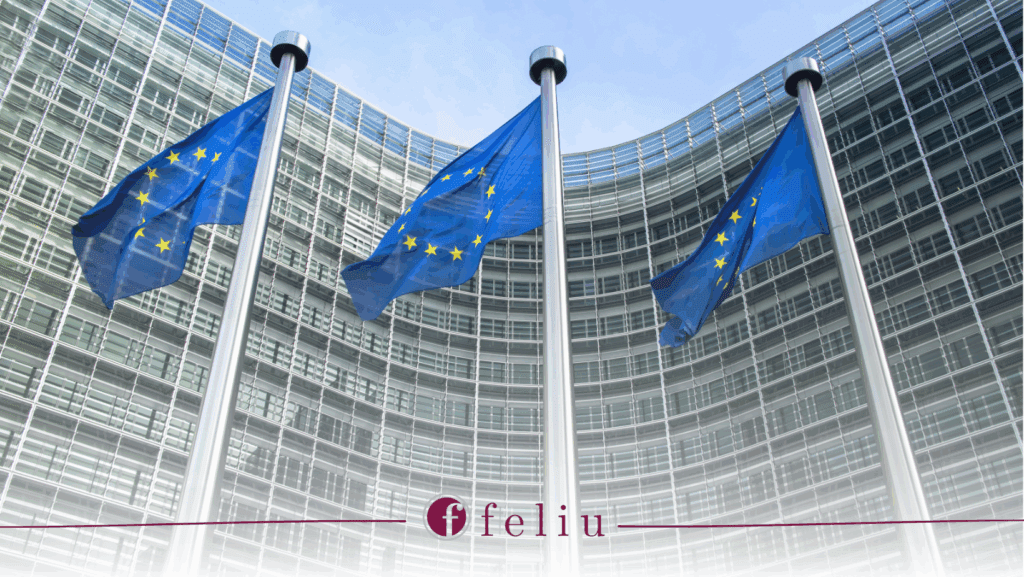
The Council of the European Union has adopted a comprehensive 19th package of sanctions against the Russian Federation, in response to the intensification of the military aggression against Ukraine and the continued deliberate attacks on essential civilian infrastructure, such as energy, water and healthcare facilities, which have caused severe humanitarian suffering.
This new package includes 69 new individual designations and an extensive set of economic restrictive measures targeting the energy, financial, technological, diplomatic and military sectors, with the aim of weakening the Kremlin’s ability to finance and sustain its war of aggression.
At the same time, the European Union is strengthening measures against Belarus, due to its logistical and political support for Russia’s war effort, progressively aligning its sanctions regime with that imposed on Moscow.
Energy: Ban on Russian LNG and the “Shadow Fleet”
The new package introduces a complete ban on the import of Russian liquefied natural gas (LNG), to be applied from January 2027 for long-term contracts and within six months for shorter contracts.
Restrictions on transactions with major Russian state-owned oil companies, Rosneft and Gazprom Neft, are also being tightened, and a conglomerate from Tatarstan has been sanctioned for its direct involvement in the Russian energy sector.
The EU is further reinforcing measures against the so-called “shadow fleet”, a network of vessels operating outside the oil price cap mechanism. In this regard, 117 additional ships have been added to the list of 557 sanctioned vessels, prohibiting them from accessing EU ports, receiving maritime services or contracting insurance.
Additionally, the EU has banned the reinsurance of vessels linked to this shadow fleet, further limiting their international operations.
Financial Measures: New Restrictions on Banks, Cryptocurrencies and International Payments
The package addresses new forms of financial circumvention identified by European authorities, particularly through the use of cryptocurrencies and stablecoins. The use of the A7A5 stablecoin, issued with Russian state backing and used to finance war-related operations, is now prohibited across the EU.
Its developer, Kyrgyz issuer, and the exchange platform where it is traded have been sanctioned.
Moreover, eight banks and oil traders from Tajikistan, Kyrgyzstan, the United Arab Emirates and Hong Kong are subject to transaction bans for facilitating the evasion of EU sanctions.
Five additional Russian banks, Istina Bank, Zemsky Bank, Absolut Bank, MTS Bank, and Alfa-Bank, are included in the restrictive measures, along with four banks from Belarus and Kazakhstan for their connections to alternative Russian payment systems.
The EU has also prohibited cooperation with Russia’s “Mir” and “SBP” payment systems, both linked to the Central Bank of Russia, and restricted economic relations with entities located in nine Russian special economic zones, considered strategic for the country’s military and technological production.
Diplomacy: Movement Control and Enhanced Monitoring
In the diplomatic field, the European Union has established a new mechanism to monitor and control the movements of Russian diplomats within the Schengen area. Diplomats must now inform Member States in advance of any travel beyond their country of accreditation, with the aim of preventing hostile intelligence activities or destabilising actions.
Member States may also require additional entry authorisations, even if the diplomat holds a visa or residence permit issued by another EU country.
Child Protection: Sanctions for Deportations and Forced Assimilation
Since the start of the conflict, Ukrainian authorities estimate that around 20,000 minors have been deported or forcibly transferred to Russia or territories illegally occupied by Russian forces. Many have been separated from their families or subjected to forced adoption and ideological re-education.
In response, the EU has added 11 new individuals to its sanctions list and introduced a new designation criterion allowing sanctions against those responsible for forced assimilation, indoctrination and militarised education of Ukrainian children.
Military Industry and Foreign Trade
The EU is sanctioning businesspeople, entities and operators forming part of the Russian military-industrial complex, as well as companies from China and the United Arab Emirates involved in supplying military or dual-use goods to Russia.
The Council has identified 45 new entities implicated in circumventing export restrictions on advanced technologies, including electronic components, CNC machinery, drones and microelectronics.
Of these, 17 entities are located outside Russia (12 in China, three in India and two in Thailand).
The list of goods subject to export bans has also been expanded to include chemical products, metal alloys, rubber, tyres, construction materials and rubber-based items.
The EU has also prohibited the purchase and import of acyclic hydrocarbons, an important source of revenue for Moscow, and sanctioned Russia’s largest gold producer, further constraining its access to financial resources.
Services and Advanced Technologies
The package introduces a requirement for prior authorisation for the provision of any service to the Government of the Russian Federation. It also imposes new restrictions on the provision of artificial intelligence, high-performance computing, tourism, and commercial space-based services.
As for Belarus, sanctions are extended to financial and software services, as well as sectors linked to cryptocurrencies, AI, and quantum computing, aligning them with those applied to Russia.
Political and Legal Commitment of the EU
In its conclusions of 19 December 2024, the European Council reaffirmed its strong condemnation of Russia’s war of aggression against Ukraine and its unwavering commitment to Ukraine’s sovereignty and territorial integrity within its internationally recognised borders.
The European Union reiterates its readiness to maintain and expand sanctions as long as the aggression continues and remains committed to working with international partners to achieve a just and lasting peace, grounded in the principles of international law and the United Nations Charter.
With this 19th package, the EU underscores that pressure on Russia will continue to increase and that European support for Ukraine will persist for as long as necessary and with the required intensity.